
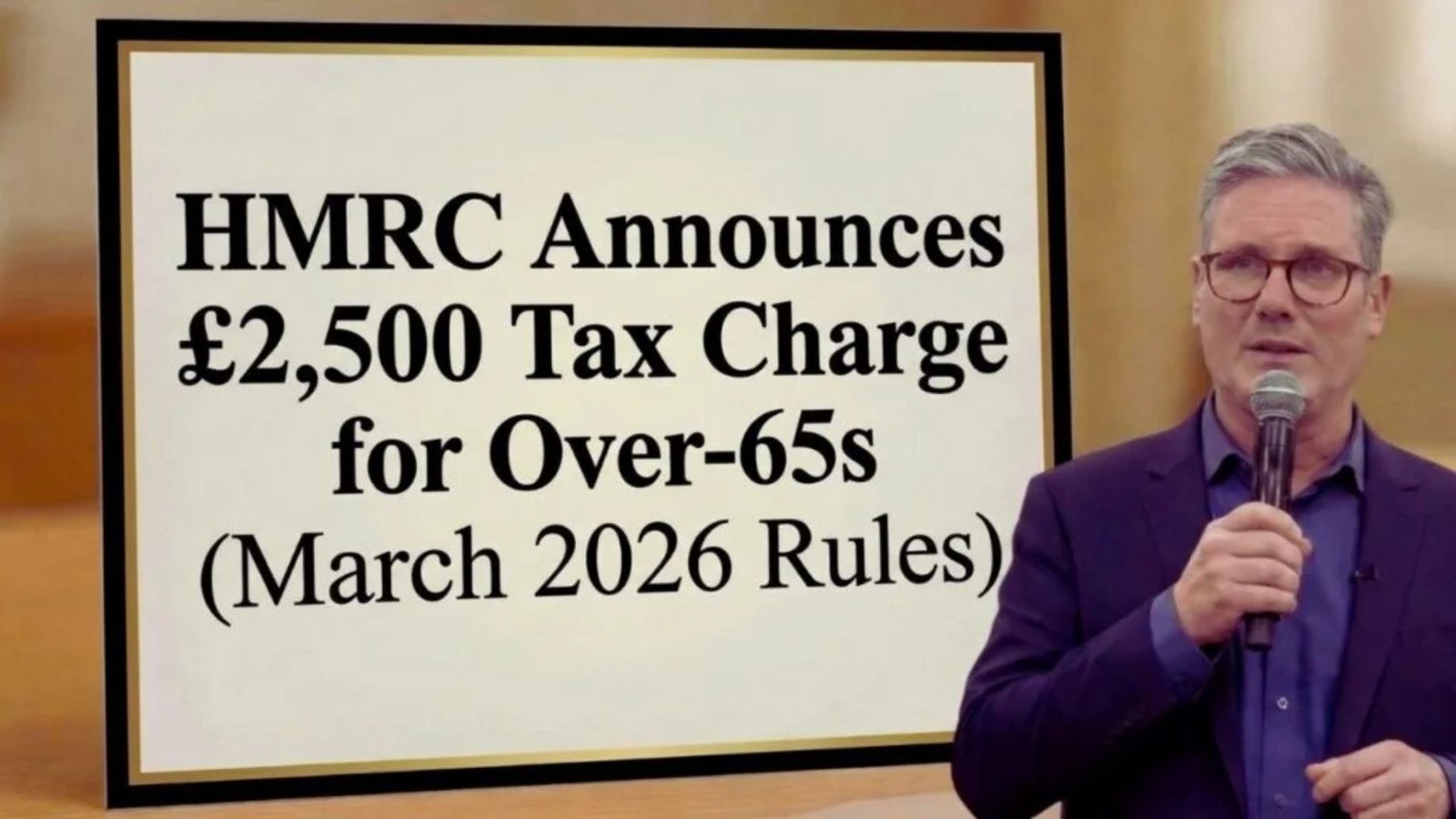
Recent headlines claim that the UK tax authority HM Revenue & Customs (HMRC) has introduced a £2,500 tax charge for people aged over 65 starting in March 2026. However, the situation is often misunderstood. In reality, this is not a single new tax bill sent to every pensioner. Instead, it results from several tax rule changes and financial factors affecting retirees.
Below is a clear explanation of what the £2,500 figure means and who might actually be affected.
Is There Really a £2,500 Tax for Everyone Over 65?
No. HMRC has not introduced a flat £2,500 tax specifically for all people over 65. The figure being discussed mainly reflects the combined impact of existing tax rules, such as frozen tax allowances and rising pension income.
For some retirees with higher income from pensions, savings, or investments, these changes can increase their annual tax liability by up to around £2,500 compared with previous years.
Why the £2,500 Figure Is Appearing
Several factors are causing this higher tax burden:
1. Frozen Tax Allowances
The UK personal tax-free allowance has been frozen for several years, while pensions and other income sources continue to increase. This means more pension income becomes taxable over time. (
2. State Pension Increases
Many retirees receive State Pension payments plus private pensions. When combined, these may push total income above the tax-free allowance, creating extra tax to pay.
3. Tax Code Adjustments
HMRC sometimes reviews pension income and adjusts tax codes. If tax was underpaid in earlier years, the authority may issue a bill to recover the difference.
4. Multiple Pension Sources
People receiving income from several pensions may not pay enough tax automatically through PAYE, leading to a later adjustment.
Property Tax Changes Also Linked to the £2,500 Figure
Some reports also connect the £2,500 figure with a future property surcharge on high-value homes. Under proposals announced in the 2025 UK Budget, properties worth over £2 million could face an additional annual charge starting at £2,500 in the lowest band.
However, this surcharge applies to property value, not age, and will be introduced later through the council-tax system.
Who Could Be Affected Most?
People most likely to see a higher tax bill include:
- Retirees with multiple pension incomes
- Individuals with private pensions plus the State Pension
- People earning investment or savings income
- Owners of high-value properties in the UK
Higher-income retirees could see tax increases close to £2,500 annually depending on their financial situation.
How Pensioners Can Reduce the Impact
Financial experts often recommend several strategies:
- Transfer assets between spouses to balance taxable income
- Use tax-free savings allowances or ISAs
- Review pension withdrawals to stay within tax bands
- Check HMRC letters and tax codes for errors
Proper planning can significantly reduce the potential tax impact.
Final Thoughts
The widely discussed £2,500 tax charge for over-65s in March 2026 is largely the result of frozen tax thresholds, rising pension income, and tax code adjustments, rather than a completely new tax targeting pensioners. (
Understanding how income, pensions, and allowances interact is essential for retirees to avoid unexpected tax bills and manage their finances effectively.